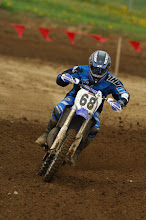
Welcome to the Better Motocross Blog

Our young sport is slowly being redefined by non-racers and those willing to exploit motocross for their own benefit. The best aspects of motocross must be maintained so it remains the sport we all love for the unique challenges it presents and the deep comradarie it promotes. With that preservation as a top priority, we must at the same time keep an eye open to growth and progress in the interest of the safety of our riders and the long-term viability of the greatest test of man and machine. I think (and hope) you may find my views, which I think of as coming from sort of a "back to the future" perspective, both interesting and thought provoking.

Friday, March 18, 2011

Fastest Man on the Planet

This year, like many others, the message boards are buzzing with “fastest man on the planet” talk. James Stewart fans love their man. Watching him attack the track like few others in the history of our sport have makes it obvious to all of us that he is tremendously talented and has a lot of heart. The “fastest man on the planet” quote is purported to be something Ricky Carmichael said of Stewart. Ricky certainly has a unique perspective on the matter. On the other side are Villopoto fans and supporters. Maybe he hasn’t always displayed the dominant single lap times as Stewart, but he’s in that same neighborhood, to be sure. The Villopoto crew correctly points out that Stewart, while showing excellent speed for 1 or a handful of laps, cannot seem to consistently string them together or maintain that pace. Who is right? What does it mean to say someone is “the fastest man on the planet”? What should be the true definition?

Let’s use for outdoor motocross for our example. This is a timed event with no definitive lap count expressed by the sanctioning bodies to signify the end of a race. Thirty minutes plus 2 laps could mean 10 laps in a mudder at some tracks or 15 or more laps under other conditions. A lap in this case has no real significance. It is simply an artificial and arbitrary distance covered within the duration of an entire moto or event. It is no less arbitrary than a section, say 1/3 of the track, a few corners strung together, a 75 yard straight, a 10 foot rut or a 10 inch morsel of ground. We wrongly assign the “lap” significance because we are humans. Humans love to compartmentalize. We love to watch the odometer turn over from 9,999 miles to 10,000. We celebrate or 20th, 30th, and 40th birthdays as though they are in some way more significant than 19, 29 and 39. With numbers we like to group then in 10’s because we have 10 fingers which led to our adoption of the base 10 decimal system for the human race. Other than that, there is no significance in life to multiples of 10. Just the same, to measure a racer’s speed in terms of a lap is no more meaningful than to measure their speed over a third of a lap, a few corners or a few inches. The only meaningful measurement in racing is from gate drop to checkered flag. How silly would it be to say that someone was the fastest rider in the world because they covered a 10 foot space between 2 yellow track markers faster than anyone? By that measure, perhaps you or I could be the fastest in the world. We could blitz some small piece of track, over-jump the small double into the corner, miss the berm and let 10 guys pass us. For several feet up the face of that jump we went faster than anyone, but it wasn’t sustainable and ended in a poor result. It turns out that flying up the face of that jump is not the fastest way to navigate the remainder of the track. Would anyone really say that you or I were faster than Stewart or Villopoto based on something we did for one small portion of the race but could not maintain?

Another analogy could be found in drag racing. Drivers and teams are typically interested in segmenting a run into 60 foot times, 1/8 mile times, 1,000 foot times and ¼ mile times. The fastest driver or car in the world is not decided by who has the best segment time. Nobody would ever say that a the car that covered the first 660 feet of a drag race was fastest if it ended up losing at the 1320 foot mark.

So, go ahead and break down a motocross race in to segments, corners, straights, and laps, whatever you wish. These segmentations make for fun debate and can provide useful information. One thing those debates don’t do is answer the ultimate question. That is left up to the checkered flag.


Friday, November 26, 2010

I Really Think Tracks Are Smoother Than They Used To Be

I know this may be somewhat controversial, even coming from a curmudgeon like me, but I really do think that motocross tracks, and supercross tracks for that matter, are smoother than they were in the heyday of our sport. I don’t know exactly why this has come about, but it seems to me that it has. Perhaps some of the trends in track preparation that were originally aimed at dust control have grown more and more extreme to the point where today the spirit of the sport has changed. We hear rumors that it may have something to do with making our sport more television friendly. That could explain some of what we saw in the last few years at the AMA Nationals. A neophyte television audience “gets” high speed and big jumps, but doesn’t understand grueling terrain and riders struggling just to make it up a hill or being jarred around by nasty bumps. This explanation does not completely cover what we see at your local track. Or, maybe it does. Perhaps indirectly, amateur riders want to ride similar tracks and perform similar feats (i.e. jumps) as their professional idols.

All of these things add up to arguably smoother tracks. The fact that tracks are smoother is well discussed and, I think, agreed upon and even admitted to by the movers and shakers of motocross. If you don’t have first hand experience of how things were 30 or more years ago, or if you are not willing to listen to old guys like me, there are some ways to find out for yourself. Check out some of the old pictures or videos on youtube of the old days. Look up the footage of the famed Hannah vs. O’Mara duel at the Unadilla U.S.G.P. The uphill before the “Screw-U” was gnarly in that race. I’ve walked up that hill at 2 different races in the early 80s. I never rode it because at the time Unadilla was open for just a couple of professional races each year. That uphill was an amazing section of chunked out, square edged, thigh deep holes and bumps with absolutely no pattern to the spacing. I’ve walked up it before practice when it was covered with waist high grasses and fantasized at how much I wanted to ride it. There was no way to get a rhythm on a section like that and the youtube video will make that obvious. A bulldozer created section, on the other hand, usually has a nice rhythm to it. At the bottom of that section, where there used to be a naturally rutted stretch because it was a low spot on the property, today there is a nicely sculpted tabletop. And, instead of the gnarly 2nd gear mess of a climb, you’ve got a 4th gear sweeping climb with nary a bump. I mean it. Compare any old videos or pictures you can find of Unadilla with the more recent stuff. Look at the video from the 2010 national. Riders climbed that hill wide open and the front or rear tire never left terra firma. What was once an unglamorous, often awkward climb for the world’s most talented riders on bikes with 13 inches of suspension travel is now a section just about anyone in a professional field of riders completes wide open in the highest gear they can find. Similarly, the addition of tons of jumps all over a track calls for much more smoothness. A 100 foot tabletop is 100 feet of perfectly groomed, smooth, and pristine track that could otherwise be bumpy, rocky, muddy and challenging. Don’t tell me that these tabletops are challenging anymore. Everyone in the “A” and even “B” classes jumps these things without even challenging their skills. I stand at the takeoff to these crowd thrilling jumps at local and national tracks and watch every rider shut off the throttle and coast the last 15 feet up the impeccably smooth clay jump face, scrubbing off speed and reaching for a tearoff (or pretending to). I call that a degradation in the roots of our sport. Maybe you don’t. There are no bumps or rocks in that 100 feet of air either. At some tracks the promoters just can’t leave a track alone. There are tabletops in almost any stretch of track that will tolerate one. Coming out of or entering nearly every turn there are jumps. Tabletop landings before turns take out the once important skill of late braking into corners which created huge braking bumps. Everyone takes the fixed speed tabletop the same and lands smoothly and brakes a little for the corner. Riders today call this “flow”. I’m amazed by that term when associated motocross. Flow was something that tracks tried to take away from riders. Tracks used to be largely natural terrain over ridges, through natural ditches, twisting hill climbs, low spots that were always muddy and never drained properly. High spots that were inaccessible to the friendly smoothing tool dragged behind a tractor. In the early 80s I once raced a qualifier in Southern Illinois where I walked around with the promoters the day before the race as they laid out some new sections. They marked off some terrain that had never been touched by knobbies. They ran it through a dry creek bed with softball sized rocks. Exposed tree roots and leaves from last fall lined the steep climbs and descents. There was one hill that was so steep that I asked the guy laying it out if any of the smaller displacement bikes like 100s or 125s could even make the climb. He said he wasn’t sure. Oh, it rained all that night before the race the next day. The next morning the whole track was no picnic, and the new sections were challenging enough to separate those that deserved to qualify from those that didn’t. These obstacles intentionally disrupted your flow. At the same time they provided opportunity for real creativity in line choice. Riders didn’t complain. That’s how we used to like our motocross and those challenges were embraced or even expected. Today’s tracks often don’t allow for much creativity other than seeking out the smoothest portion as the lines change throughout the day. Today’s obstacles--jumps—don’t encourage much creativity other than the choice to double, triple or whatever. I think tracks of old offered more opportunity for a rider to demonstrate real skills that clearly demonstrated the highly skilled from the lesser skilled. The other important thing about those kinds of challenges in early motocross is that they were SAFE. It wasn’t very likely that you would break your back even if it took you a couple of tries to get up a hill on your big bore Maico.

I place most of the blame for the changes in our tracks on the growing popularity of motocross among non-motocrossers, mainly via television and product advertising. Maybe some people today get into motocross for different reasons than us old-schoolers did. Originally, motocrossers were by definition, out of the mainstream of sports and indeed society. We were drawn to the sport because the sports others were drawn to didn’t do it for us. With the image of motocross today largely controlled by the mainstream media and mainstream product marketing, the appeal is just different. Back-flips, tattoos, partying and high fashion are the calling cards for what is called today’s “motocrosser”. To me, freestyle, the unfortunate face of our sport today, is not motocross at all. Sadly, it is not only what passes for motocross today, but what often defines it. It is likely that if you are drawn to buying a dirt bike because of the energy drink add with the flat-biller flipping his blacked-out bike in front of his bikini clad girlfriend, you are drawn to buying a dirt bike for different reasons that what drew Roger DeCoster. The actual experience you get once you through your leg over the seat and head out to a motocross track with your friends will not link up very well with the image of what you saw on TV. Yes, freestyle is difficult. Yes, it requires tremendous talent. Yes, it requires unflinching courage. Motocross requires those things as well, and much more. On another note, I have written elsewhere on the Olympic Games and things that are misclassified as sports. Look, anything that must be judged is not a sport to me. It is entertainment. It is often very difficult, very dangerous and requires tremendous physical talent. Those things don’t make it a sport. A sport, to me, is something where there is a definitive winner or loser-- first across the finish line, the one that went the farthest, fastest highest or scored the most points---stuff like that. Freestyle to me is no more a sport than figure skating.

For many decades you discovered motocross through your father or your big brother, by having a mini-bike, or riding a friend’s motorcycle. Maybe that hasn’t changed. The difference was that you often didn’t even know what motocross was until AFTER you rode some. It was a sport largely fueled by self-discovery. The sheer joy of riding hooked many of us. Anyone that spent any amount of time in the saddle at all quickly experienced the unique physical challenges motocross presented. A real rider rides in all weather—rain, snow, heat, you name it, we need to ride. I laugh at people that say things like “you shouldn’t go running today Frank, it is too hot outside, too dangerous”. See, most people avoid exercise in inclement weather of any kind. Those of you that are real racers know that hot days, or rainy days, or cold days, are the days that you MUST ride. You can’t choose the weather on race day. A real rider falls. As a result you have constant bumps and bruises at best and serious injury at worst. These are just realities of the sport. The toughness required quickly weeds out the weak of mind, body and heart. This toughness factor makes accomplishment all the more gratifying. The harder you work for something, the more you’ll value it.

I’m not so sure that many of today’s riders are drawn to the sport because of the physical challenge and dedication it takes to even be a good “C” rider. If you are drawn to a sport because of the “show” factor glamorized on television today, you’re likely looking for something different than those that discovered the sport through experience and sweat. I’ve seen it---you’ve seen it. On practice days at beautiful and demanding motocross tracks, riders spending all of their track time riding the same jump section over and over again for the thrill of jumping or showing someone in the pits how good they are at jumping. Sure, I like jumping and so do you. It is one of the things that we all enjoy about riding. But, when jumping is the only thing you like about motocross, you are not a motocrosser. Admittedly, I am not a freestyler and I don’t want to be confused with one.

Wednesday, November 24, 2010

One Step Up, Two Steps Back?

There have been some changes in the world of motocross that I think have had some positive effects but also have negative in other aspects. Track preparation is one of those changes? You are asking yourself, “is this guy crazy--of course, tracks are prepared better now than ever.” Well, not so fast. Again, I had the chance to ride motocross in 2 different eras, the 70s and the late 2000s. Back in the early days of motocross promoters tried to keep the dust down and usually turned up the soil a bit to smooth out the bumps from the last race. They even sometimes brought in some wood chips or soil to work into the track to make a section or 2 deeper and loamy. What makes my perspective crystal clear is that I rode in both eras almost “overnight”. See, I didn’t ride much in the latter part of the 80s, the 90s or the early 2000s. I think I saw a stark contrast that may be lost on riders that rode the same tracks week after week, month after month, year after year.


There is surely some good that has come about with the increased promoter interest in track preparation. I’m amazed at how quickly and simply they can put water down on a track these days. Red Bud, for example, like many other tracks, has water truck access roads running alongside the track where the water truck can easily cruise along and spray a nice coating of H2O to the entire track in a pretty short period of time without ever having to drive on the track itself. These access roads allow the water trucks to quickly hit the trouble spots no matter where they are on the track without having to navigate the entire track to get there. Other tracks have tremendously powerful pumping systems that get the water to hoses positioned around the track. It isn’t the garden hoses and sprinkler heads that we felt lucky to have in the 1970s. The obvious result is that at good tracks today there is much less dust than we saw in years past. Dust was always a reality in motocross and made the all important start, that much more important. It isn’t a thing of the past, but nearly so.

A related but, I think, less positive aspect of modern track preparation is the trend to “rip” the tracks really deep. Good tracks have always disked up the soil, but lately the trend is to rip them calf-deep and pour on the water. This method helps the track maintain the water and cuts down on dust---as I said, a good thing. What’s more is that motocrossers have always loved to tear into deep loam. A nice roost shoots up in the sky, the engines sound better as they reach for every last bit of horsepower and riders love the feel of blasting through fresh soil. What could possibly be bad about that? Well, in my opinion, a track that is ripped too deeply results in a track with fewer racing lines. These tracks develop a couple of lines in each turn and even down each straight. The problem is that if you get out of the line, you are harshly penalized by deep, wet soil that slows you down tremendously in comparison to the worn in lines. Picture the typical turn on today’s ripped national (or local) track. In a 20 foot wide corner there may be a good inside line and a good outside line, each of them with about 2 feet of racing surface. Fully 16 feet of track go unused. On a track that is not ripped so deep, many more options are presented to the rider. Often you can use ALL 20 feet of the corner. Start inside-stay inside, start inside-drift outside, start outside-cut across the middle to the inside. A track with more options allows for better racing. This is why first turns are usually prepped a little differently or prepped more often on race day. A proper first turn cannot have 1 inside line and one outside line. You’ve got to have room for 40 riders to fly around there elbow to elbow. Almost without fail, when I watch national coverage on television and hear the commentators talk about the track being “1 lined”, it is because most of the track is so over-prepped as to be almost unraceable or at least too penalizing to those that stray. When I’ve seen races where everyone feels the track offers multiple lines and good racing it is inevitably a track where the corners are open to many choices by riders. Ripping a track too deep and overwatering it while ripped may cut down on dust in the 2nd motos but it in essence makes the track ride as though it was a mud race for a part of the day. Riding in rutted corners and grooved straights is nice every once in a while, and great skills for riders to attain, but race after race of 2 lined corners and 15 ruts grooved down the straights is not really a great way for riders to let it all hang out. Oh, I almost forgot—the tracks are prepped like this everywhere except for the freeway like jump takeoffs and landings. Heaven for bid a track gets so rough that you can’t jump 100 feet every lap and show the drain plug on a tabletop between nearly every corner.

In the end, I think that modern promoters have used their heads to make their tracks very accessible to watering and they’ve done a great job of making them loamy and appealing to the part of each of us that loves to tear up virgin terrain. However, as is usually the case, too much of a good thing is usually not that good. Rip the tracks, keep the watered and give riders something to dig their new tires into, but don’t overdo it. Let the tracks develop racing lines from fence to fence and let the riders hang it out instead of slot car racing their way from jump to jump.

Tuesday, November 23, 2010

Some Real Progress

Just so you don’t get the impression that I don’t think any progress has been made in the sport of motocross over the last 40 years or so, I thought I’d talk about a few things that seem like improvements to me.

Every track I can think of today has a backward falling gate. That’s a pretty simple change that many racers of the last couple of decades would take for granted, but it really has made the all important start a fair contest. I was a really good starter back when I was younger. I was able to time the forward falling gates because even if you bumped them a little they were falling away from you and didn’t impede your progress much. I totally killed the starts when the old bungee cords were used. If you got a spot in the center where the bungee cords were tethered, you could leave much earlier than the competitors on the far inside and outside spots because the rubber band took comparatively longer to get out of their way. Today’s backward falling gate is designed to give everyone an equal chance at getting a good jump and at the same time offers a pretty steep penalty for those that pull the trigger too early. I can’t think of much improvement needed for starting gates. Still, too many tracks have first turns that don’t offer much of a chance for riders to holeshot unless they are in the handful of prime spots. That’s always been a problem that I think many tracks with ample real estate could perhaps do a better job at.

Transponders are pretty cool. Exact lap times and splits are a great way to gauge a rider’s performance on race day and are a great training tool. I’m not so crazy about using this exact timing capability to justify qualifying for AMA motocross nationals based on lap times in qualifying practice. I’d still rather see riders race their way into the lineup at a national. I guess there is good and bad about either method. Racing your way into a position in a qualifier can leave good riders out of the show if they get a bad start or have a small crash. Of course, that is part of racing and racing is what we value as racers. Track conditions on a motocross track change so much from the first practice of the day to the second, third and whatever, that it is really doesn’t seem quite fair to qualify riders based on lap times on a track where conditions can change so much in 45 minutes that a 5-6 second gap is possible. Let’s go back to racing our way into the big show at nationals. Still, transponders are cool.

I think there are many more women racers now. That’s got to be a positive thing when we can make our sport more accessible to any demographic with the desire to compete. I can remember many women racers back in the 70s when I first started. They had to compete against the men, which, for the most part, wasn’t fair. Of course, there were some women like Lisa Akin that were plenty fast and competed at the front of the pack in the “A” class at big amateur races.

I also like the fact that promoters make special tracks for pee wee riders. What a great way to get the very youngest riders on the smallest bikes out on a real motocross track and in a real race. This gives the little ones a track of their own, more suited to their machines and skills, to learn how to ride and compete. I do see some kids stay on the pee wee track too long after their skills have progressed to the point where they should be riding the big tracks. Get those kids on the real tracks when they show the ability to ride it. I’m not sure there’s much utility in keeping them on a beginner track for very long. I think my 3rd race ever was on the same track Roger Decoster rode at Red Bud.

I suppose protective gear has progressed too. I don’t know if the changes are revolutionary, but I would say that a rider is generally safer today than when I first started. Helmets are definitely better. From a seat of the pants perspective, the padding and fit are much better than the high end helmets of the 70s and 80s. I also think the nationals safety standards have gotten higher too, which is the kind of progress we need. Knee braces are a great improvement for today’s racer. I have 2 reconstructed knees from my early years of racing. My second career was really only possible because of the high quality knee braces available today and the stability they provided me. I’m pretty sure that I would have horrifically blown out my already blown out knee a few years ago when I went down in a fast sweeper. My upper leg turned purple (which I was quite proud of), which I think was because of the way the brace redistributed the load of the crash away from my vulnerable knee to my strong thigh and femur. I wouldn’t ride without knee braces and I wouldn’t recommend that anybody does. This brings me to neck braces. Without fully knowing the science behind them, I’m fairly confident that they would likely prevent some serious neck injuries. I know that this is a controversial subject, and that many well respected racers opt not to use them. Some of the comments I’ve heard are that they “are not convinced” that neck braces are beneficial. To me, that would be a bad idea to avoid wearing one. On the other hand, I’ve heard others say that they think the current generation of neck braces actually causes some types of neck or back injuries. Again, I’ve not seen the science either way. I don’t know if I trust many of the naysayers because I see many racers avoid wearing obviously beneficial protective gear for various reasons. I remember when people avoided full face helmets because they were said to cause collarbone breaks. Now full face helmets are required and I don’t think anyone would seriously consider racing motocross without one. I also see many riders and role models avoid wearing obviously effective gear like shoulder pads because they find them hot or uncomfortable in some way. To me a little discomfort is not a good reason to avoid solid protection. In any event, I think the movement toward trying to find effective neck and spine protection has come none too soon. We’ve started down the path of developing this important technology and it will only get better.

Change is inevitable. Let’s keep trying, keep considering and keep moving when the movement makes sense for motocrossers; average, every day motocrossers.


Monday, May 24, 2010

Wanna Be Like NASCAR...Really?

In this essay, my first in the “Do you really want motocross to be more like NASCAR” series, I will focus on something that many seem to feel will automatically have a positive impact on the sport of motocross. The overwhelming consensus on message boards, web-sites and in magazines is that we would all be much better off if only motocross would grow up and be like NASCAR. This thinking has a narrow minded focus. That focus is money. Though there are possibly many other things about NASCAR to aspire to (I don’t know what they are), let us not kid ourselves. The one stirring up the motocross masses in MONEY. Money is associated with TV coverage, huge crowds, spit and polish facilities, pits crammed with beautiful 18 wheelers and hot women. The other thing that money is associated with is, well, money.

I think we need to ask ourselves who really stands to benefit from a large cash influx. Have you ever not ridden your motorcycle because there aren’t any $1000 box seats at your local track? Have you ever bowed out of a moto because your track didn’t have $12 paper cups of beer and awesome chicken wings? Paved parking? If you are a racer, have you ever even refused to go WATCH a race because the facility lacked these things? I hope not. See, it is difficult to make a case for much positive that comes about for the average racer (99.9% of us are the average racer) due to the influx of big money. When you think about it, does the average racer benefit at all from the kind of growth that many hope for today and have for 20+ years?

Over the coming months I will write about some of the specific changes we’ve actually seen in motocross over the years. Some I think are good for the sport and others I think are bad. I hope to make you think about these changes and what they mean to you and the sport that makes you unique. I hope to make you think about a perspective that does not assume that higher cost = higher satisfaction. I think you will see that most of these “improvements” will fall under the category of trying to be more like NASCAR.

Sunday, May 23, 2010

Not Better - Modern Jumps

It is common today on practice days and race mornings to see riders lined up on the side of the track to take a look at particular sections. This has always been the case. In days past we looked closely at muddy areas, steep up-hills, nasty down-hills and rough sections of track to find the best line to pick our way through the gnarl. Today those riders are observing obstacles with much more at stake. They are looking at obstacles with very severe circumstances if they are not navigated successfully. Enormous leaps with steep penalties for small miscalculations. “Should I, or shouldn’t I” is the question all riders must now ponder. Every rider from novice to national caliber professional must at times consider jumping a distance with which they are not comfortable. Of course, nobody must jump anything. But this is racing and riders race to win.

The sense of accomplishment you get if you try and succeed in clearing a huge jump is quite high. You have now pushed your limit and have found a new one. For most young riders this game of incremental risk continues each week, each season. Sometimes we don’t successfully clear the jumps. We can laugh with our friends about how we almost “ate it”. These small failures offer little deterrence for most competitors. Other times they are much more serious. My point is that all of us misjudge our abilities at times. If you misjudge a muddy section or nasty up-hill climb, the circumstances are usually more embarrassing than they are life threatening or career ending. Of course, finding a fast, clean line on an up-hill is a much more subtle success, less impressive to spectators. It will be evident in your lap-time by a few tenths of a second if anyone is looking closely enough to notice. It doesn’t always make for a cool picture on your Facebook page. It just doesn’t look that cool to the non-racer.

I'm grown a bit tired of pictures of motocross stars jumping.  Personally, I would much rather see pictures of a rider though a tough corner, a rough section of track or simply ON THE GAS and ON THE GROUND. Not only are the big jumps overly dangerous, to me they are quite boring. Watching everyone in the “A” class clear the same gap is not impressive. I’m so nonplussed when I look through motocross magazines and web-sites at endless images of riders in the air--body and bike contorted so as to “scrub” off enough speed and not miss the landing ramp on the downside of the jump. Nobody wants to flatland a 100 foot gap. Picture after picture, page after page of riders in the most boring part of a motocross track…the air. The air is where you can take a breather, pull a tear-off or adjust your clutch. The air over a motocross track is the most non-motocross part of a motocross track. No bumps, no ruts, no acceleration, no deceleration. How many pictures can I look at of a rider and a motorcycle in the most restful part of the race? Give me pictures (and tracks) of riders working their hardest, using the engine, using the suspension and using the brakes of these amazingly engineered motorcycles. I love to look at the terrain, the hillside, the muddy valley, the corner so chewed up all day that there have been four “best lines” since the first moto. Your girlfriend might not get it. Your friends on Facebook might not understand. But, you and the others in the small fraternity that have lined up 40 wide in the most demanding sport of all will understand.  We need to start asking ourselves if we are happy that motocross has turned into a “spectator sport” or if we can be satisfied, as we have been throughout the history of motocross, with knowing that we are part of a participation sport, where only those that have done it really understand what "it" is.  Do we ride for the people in the stands (which for 99.9% of us are very few) or do we ride for the physical and mental challenge that most spectators will never come close to understanding? I know what drew me to motocross and I think it was the same thing that attracted those guys to carve through the European hills on those heavy pieces of iron just after World War II.

Friday, May 21, 2010

Why Better Motocross?

I created this blog only a couple of days ago. I have lots of thoughts and feelings around the sport of motocross. I like to share my opinions when I feel strongly about something. Motocross is something that I’ve always loved. I think I have a somewhat unique perspective on the sport. In my total of 36 years in and around motocross I have had 2 very separate periods of intense involvement and long periods of various levels of observation without direct participation. As an 11 year old, with a few years of Tecumseh mini-bike riding under my helmet I tried spinning some laps around a motocross track. Finally, not yet 13 years old, I raced in a real race. I was on a spanking new YZ-80 as was damned near every other kid on that northern Indiana natural terrain track. My first race was a snowy/rainy March day. I rode the mini “A” class. I was eligible for the “B” class but I don’t think my dad knew that or maybe he just wanted me to face a stiffer challenge. I’m pretty sure I fell in the exact same mud hole each and every lap of both motos. I’m also pretty sure I finished last, but I did finish. I raced about a dozen times that first year on tracks all over the Midwest from Byron Illinois to Red Bud Michigan. My dad and I were hooked. The next year I hit about double that number of events. I was improving. Like most burgeoning motocross racers, I spent every waking moment riding or wishing I was riding. I rode nearly every day. I mean that. Nearly every day even in the midst of the long Chicago Winters and rainy springs. Soon I was in the 100cc A class and starting to show some skills. I started winning races. Eventually I was racing further from home routinely. Florida, Georgia, Ohio, all over the Midwest. Over the years I won my share of races in the 100, 125 and 250 A classes, sometimes against some pretty stiff competition. I was never a prodigy nor did I ever feel like I had a career in motocross, but I was a fast local guy. At age 18 I blew a knee out pretty good and knew it was time to start thinking about growing up. At the time ACL surgeries were pretty sketchy. I opted not to have surgery. I rehabbed my knee and headed for the Air Force. I spent the next 12 years in the Air Force forging a career and building a family. Not a lot of time and money were available for motocross but I kept up with the sport the best I could. When I think back, I recall that I never even bought a motocross shirt or hat in all that time. Motocross is more of a participant sport and I would have felt a little funny pretending that I was one. Eventually I got out of the Air Force and settled back down in the Midwest. I waited another 12 years or so and bought another new motocross bike.  Twenty-four years between motos.  Once again it was full bore ahead for me. I got a nice enclosed trailer and spent every weekend possible riding at some of the best tracks the area has to offer. I live about 50 minutes from Red Bud, 20 minutes from a new gem called Motoland and within 2 hours or so of many other tracks. I raced or rode at least once every weekend. Sometimes even 3 races in a single weekend. I was riding the 40+ class on a YZ125 against mostly 450s. Over the next few years I regained my comfort with riding I got smoked some and I won some. Eventually I had a bad and stupid fall where I kicked the bike into a false neutral over a pretty good sized jump with a gnarly, sandy, whooped out landing. The crash left me with a damaged liver and ultimately missing a kidney. I was 45 and smart enough to know that it was time to quit again.

So, my unique perspective is that I got 2 separate and distinct snapshots of the sport from the perspective of a very active participant. I saw with great clarity the things that had changed and the things that had stay the same. Over the course of this motocross rebirth I had witnessed an interesting behavior in myself which is very subtle but says something of human behavior. When I raced as a kid I had long hair. I would have to pull my hair back a bit, fling my head back and slide the helmet on to keep the hair out of my eyes and face. In my second career I was running a buzz cut down to about 1/8 inch. The first time I went to put on my racing helmet as a fully grown man my instinct was to push back my hair and tilt my head back. It was unconscious and without reflection. I noticed it right away and chucked a bit. For the rest of my second career I remained amazed at the subtle behaviors that had stayed with me despite 25 years of dormancy. I always thought that was pretty cool and very interesting. What I mostly learned was that while there was a huge continuity break in my partcipation as a motocross racer, there was at the same time a feeling of absolute continuity that allowed me to experience the evolution of motocross as if over night.

My two distinct experiences with participating in motocross allowed me to see the changes and the similarities with an almost eerie clarity. It was like I never left but was transported to the future. All of a sudden I was on a modern bike, on modern tracks and constantly buying parts on the internet. This clarity allowed me, or even forced me, to evaluate the state of the sport today as compared with how it was a quarter century ago. Like a motocross Rip Van Winkle.

This blog will be where I voice those observations. I think my approach will be to alternate my postings to comment on changes that I feel are better for the sport, not better for the sport, or undecided. I’ll touch everything from tracks, rules, equipment, media coverage, demographics and maybe a few more. To start with you can see my first two postings were somewhat critical views on modernity. “Supercross only” contracts and riders were unthinkable in the early days, so that got my attention. Of course, it is becoming apparent to most of us today that we have nearly a crisis of injuries and death in our inherently dangerous sport. This is disturbing to me and I’m happy to see some professional riders fed up enough to consider making changes. We need voices of reason in our sport, especially on a topic with such obvious importance as safety. So, tune in, read on, get pissed, agree, disagree, whatever, but think about what you love about racing motocross.